+20.2 lb of Muscle in 15 Weeks: A Case Study
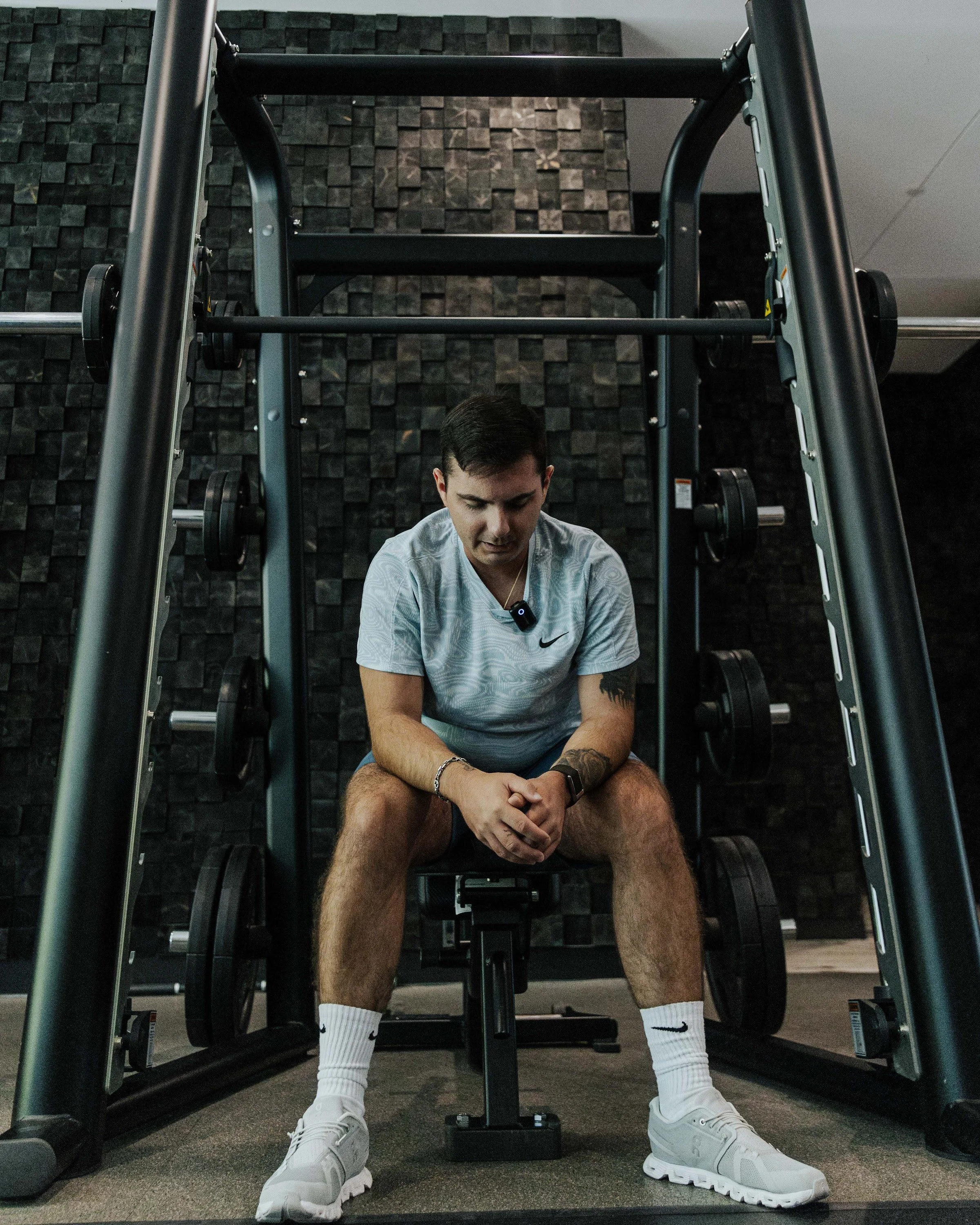
"I never wanted to take off my shirt. I'm finally starting to feel comfortable in my own body. It makes me a tad emotional looking at former pictures of myself."
That's Dylan. He works in media, where the schedule changes week to week and personal routines are the first thing to go. In 15 weeks of private coaching with me, his DEXA scans showed:
+20.2 lb muscle
−2.4 lb fat
15 weeks, verified by DEXA
Why the scale would have lied
Dylan's goal wasn't to get smaller. It was to build a body he was proud of. On a bathroom scale he went up about 18 pounds, and someone judging by the scale alone might have panicked. His DEXA scan showed what actually happened: almost all of that was muscle, and his body fat went down at the same time.
That's why every client I coach gets scanned at the start and every 12 to 16 weeks. The scan shows whether the work is building muscle or just moving the number on a scale.
What the coaching looked like
Every client's plan is built around their own body, history and schedule, but the foundation is the same:
Strength training built around a squat, hinge, push and pull, with the weights going up over time.
Enough protein and enough food to fuel muscle growth.
A plan that bends with the schedule. When a week got busy, the session got shorter, not skipped.
Regular check-ins and DEXA scans so we could adjust based on data, not guesses.
The part the numbers don't show
Twenty pounds of muscle is a big number. But what Dylan talks about isn't the number. It's feeling comfortable in his own skin for the first time. That's the result I care about most, and it's the one most of my clients mention first.
Is this realistic for you?
Dylan's results are his own. How much muscle you can build depends on your starting point, training history, age and consistency. But his story shows what happens when the training, food and accountability are right and you stick with it through the busy weeks.
Where he started
When Dylan came to me, he wasn't new to the gym, but he'd never followed a plan that built on itself. He'd do a few weeks of hard training, get pulled away by work, and start over. His schedule in media changed constantly. Shoots, travel and late nights made any fixed routine hard to keep.
So we didn't build a fixed routine. We built a plan that could move with him.
How we built around his schedule
Three strength sessions a week, placed wherever his week had room. Not always Monday, Wednesday and Friday.
A shorter 30-minute version of each session for the days that got crushed.
Protein planned around his shoots, with shakes and simple meals he could take with him.
Weekly check-ins so we could adjust the next week before it started.
The key wasn't a perfect week. It was never letting a bad week turn into a lost month.
Eating to build muscle
Building 20 pounds of muscle takes food. A lot of guys who want to get bigger undereat without realizing it, especially on busy days. Dylan's plan focused on hitting a protein target every day and eating enough total food to support growth. We adjusted it based on his scans. When his fat held steady or dropped and his lean mass climbed, we knew the amount was right.
Training that progressed
His sessions were built around the basics: squats, deadlift variations, presses, rows and pull-ups. Every week the goal was to do a little more than last time, either more weight or more reps. Over 15 weeks, those small jumps added up. His lifts climbed steadily, and his DEXA scans showed the muscle to match.
What made the difference
Looking back at Dylan's 15 weeks, three things stand out:
He showed up, even when the session was short.
He ate enough to grow, which is harder than it sounds.
He trusted the data. When the scale went up, he looked at his scan instead of panicking.
Frequently asked questions
How much muscle can you build in 15 weeks? It varies a lot. Training history, starting point, food and consistency all matter. Dylan's result is on the high end, and it took real commitment.
Do you have to gain fat to build muscle? Not always. Dylan built 20.2 pounds of muscle while his fat went down slightly. A DEXA scan shows whether you're getting the balance right.
What if my schedule changes every week? Build a short version of every session and plan each week ahead instead of following a fixed calendar.
The mindset shift
Early on, Dylan judged every week by how he looked in the mirror. Some weeks he felt great, some weeks he felt like nothing was changing. That's normal. Muscle builds slowly, and you see yourself every day, so you miss it. We moved his focus to things he could control: sessions completed, protein hit, sleep protected. Once he stopped grading himself on the mirror and started grading himself on the work, the weeks got easier, and the results came anyway.
What you can take from it
Build the plan around your real schedule, not an ideal one.
Eat enough to support the goal you actually have.
Measure with DEXA so the scale can't talk you out of a plan that's working.
Judge yourself on the work you do each week, not on how you look on a given day.
Work with me
I coach a small number of executives one-on-one in Scottsdale, with DEXA scans to measure every change. If you want a plan built around your schedule, book a $99 Executive Performance Audit. You'll get a full strength, conditioning and mobility assessment and a personalized 7-day plan.
Related reading
References
About the author
Akram Hameed is an executive fitness coach in Scottsdale, Arizona, and the founder of Body by Akram. He is a Certified Personal Trainer, Certified Nutritionist and Strength and Conditioning Coach with a background in competitive kettlebell sport. Every client result he publishes is verified by DEXA scan. Follow him on Instagram.
This article is general education, not medical advice. Check with your doctor before starting a new training, nutrition or supplement plan.
