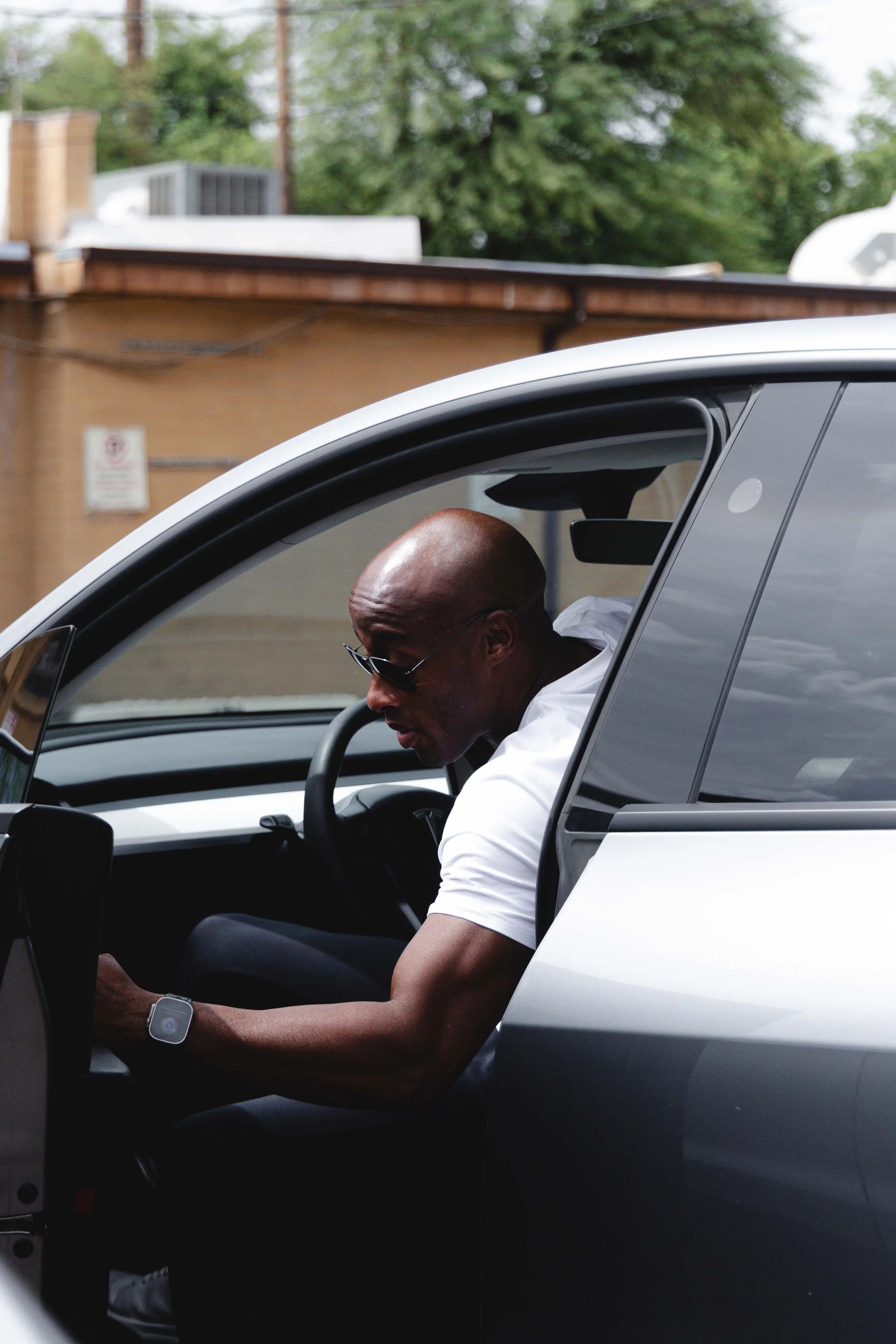
Akram Hameed, executive fitness coach in Scottsdale, Arizona.
"I sleep eight hours and I still wake up exhausted." I hear this from executives every month. They've done what they were told. They're in bed long enough. They still feel flat by mid-morning and wired at midnight.
Time in bed and recovery aren't the same thing. Here are the patterns I check first with a client, in the order I check them.
1. Are you actually asleep for eight hours?
Most people who say eight hours mean eight hours from lights out to alarm. Take away the time it takes to fall asleep, the wake-ups you don't remember, and the 2 a.m. email check, and it's often closer to six and a half. A wearable isn't perfect, but it's good enough to show you the gap.
2. Is your schedule all over the place?
Going to bed at 10 on Tuesday and 1 on Saturday is like flying across time zones every weekend. Your body never knows when to wind down. The single biggest fix I see is a fixed wake-up time, seven days a week, even after a late night.
3. Alcohol and late dinners
A couple of drinks helps you fall asleep and then breaks up the second half of the night. A big meal close to bed does something similar. Try a two-week experiment: last drink and last big meal three hours before bed. Most clients notice the difference in the first week.
4. Caffeine after lunch
Caffeine sticks around for hours. A 3 p.m. coffee is still partly in your system at 10. If you need it to get through the afternoon, that's usually a sign of point 1 or point 5.
5. You train too hard, too late, or not at all
People who don't train tend to sleep worse. People who train hard at 8 p.m. can struggle to come down. Three strength sessions a week, ideally earlier in the day, plus daily walking, is the pattern I see help most.
6. Stress that never switches off
If your last hour of the day is inbox, news and planning tomorrow, your brain is still at work when your head hits the pillow. Give yourself 30 minutes with no screens. Write tomorrow's list on paper so it's out of your head.
When it's not a habit problem
If you snore loudly, wake up gasping, have morning headaches, or still feel exhausted after fixing all of the above, talk to your doctor. Sleep apnea is common in men and often goes undiagnosed. No training plan fixes it.
The two-week reset I give clients
Same wake-up time every day, weekends included.
No caffeine after noon.
Last drink and last big meal three hours before bed.
Bedroom cool, dark and phone-free.
Morning daylight within an hour of waking, even a 10-minute walk.
Three strength sessions a week, finished before evening if you can.
Run it for two weeks before you judge it. Most of my clients feel the difference before the second week is out.
What good recovery feels like
A lot of clients don't remember what good sleep feels like, so here's what I tell them to look for. You wake up close to your alarm, sometimes before it. You don't need caffeine to function in the first hour. Your energy holds through the afternoon without a crash. You feel ready to train on training days. If that sounds unfamiliar, there's room to improve.
Why sleep matters for your body, not just your mood
Poor sleep doesn't only make you tired. It makes you hungrier the next day, especially for high-calorie food. It makes hard training feel harder and recovery slower. Over weeks, it works against the muscle you're trying to build and makes fat loss more difficult.
I've watched clients make more progress after fixing their sleep than after changing their training. The program didn't change. Their recovery did.
Travel and time zones
Executives who travel get hit twice: late nights and shifting time zones. A few things help:
On short trips, stay close to your home schedule if you can.
On longer trips, get outside in the morning light on day one.
Go easy on drinks the first night. It makes adjusting harder.
Train or walk the morning you arrive. Movement helps your body clock catch up.
The evening routine I give clients
You don't need a 12-step ritual. Three things cover most of it:
Set a phone alarm for one hour before bed. That's your signal to start winding down.
Dim the lights and close the laptop. Read, talk, stretch, take a shower.
Write tomorrow's top three priorities on paper so your brain isn't rehearsing them at 2 a.m.
Frequently asked questions
Is eight hours the right number for everyone? Most adults do best with seven to nine hours of actual sleep. Quality and timing matter as much as the total.
Should I use a sleep tracker? It can help you spot patterns, like late dinners or alcohol hurting your night. Don't obsess over the score. How you feel matters more.
Does training in the evening ruin sleep? Not for everyone. Some people sleep fine after an evening session. If you struggle, move your hard training earlier and see if it helps.
A plan built around you
For coaching built around your goals and schedule, start a conversation with Akram. Together, you can discuss your starting point, assess fit, and explore your next step. Coaching investment is discussed privately.
Related reading
References
About the author
Akram Hameed is the founder of Body By Akram and an executive fitness coach in Scottsdale, Arizona. Since 2019, he has coached CEOs, entrepreneurs, and professionals who want their health and physical capabilities to reflect the standards they bring to the rest of their lives. A Certified Personal Trainer, Certified Nutritionist, and Strength and Conditioning Coach, he combines training with nutrition, habit formation, behavior change, and personal accountability. His approach includes Proteus strength and power testing and DEXA body composition scans. For clients exploring hormone optimization, he coordinates physician-reviewed blood work. Follow him on Instagram.
This article is general education, not medical advice. Check with your doctor before starting a new training, nutrition or supplement plan.