The 3-Hour Training Week for People Running Companies
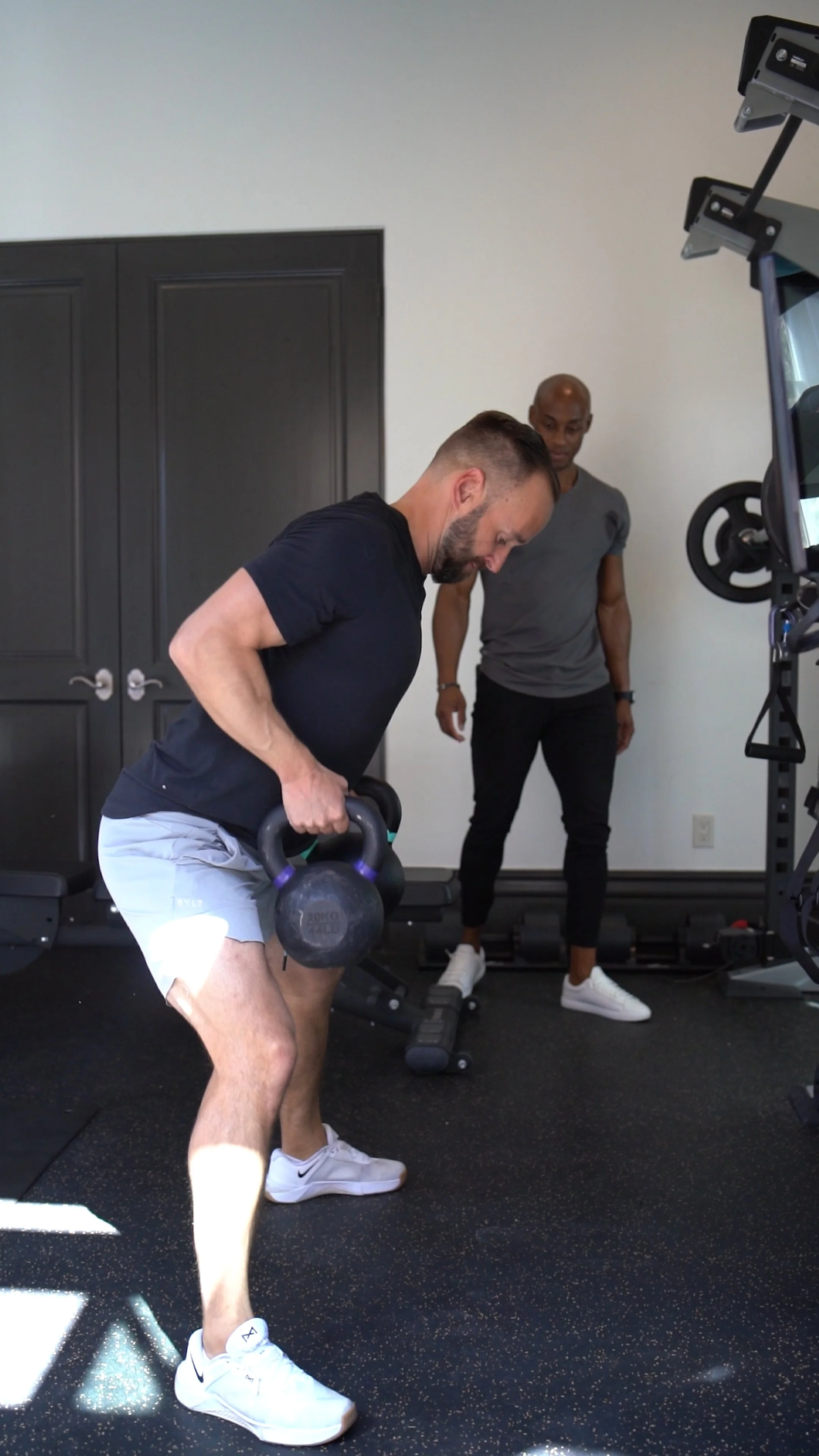
The most common thing I hear from founders on a first call is "I don't have time to train." Then we open their calendar. There are almost always three hours in it. The problem isn't time. It's that training is the first thing to move when the week gets loud.
Three hours a week is enough for most busy men to build real strength and muscle, if those hours are planned, protected and progressed. Here's how I set it up for the executives I coach in Scottsdale.
What three hours actually buys you
Three hours means three 60-minute blocks on your calendar: ten minutes to warm up, about 45 minutes of focused strength work, and five minutes to cool down and get back to your day. That lets you train every major muscle group more than once a week, which the research on training frequency suggests beats hitting each muscle once. It also clears the World Health Organization's guideline of muscle-strengthening work at least two days a week.
Step 1: Book it like a board meeting
Pick the same three windows every week. Monday, Wednesday and Friday mornings work for most of my clients. Early mornings are the slot meetings rarely take.
Make them recurring calendar events. Give them the same weight as a board meeting.
Brief your assistant. Those blocks only move if a meeting can't happen any other time.
Leave a day between sessions. That's when you recover and adapt.
Step 2: Know what each session is for
Walking into the gym without a plan is how 45 minutes turns into 90. Every session should be written before you arrive. A simple split that works:
Session A: a squat pattern, a horizontal push, a horizontal pull and a loaded carry.
Session B: a hinge pattern, a vertical push, a vertical pull and core work.
Session C: single-leg work, a push and a pull, then a short conditioning finisher.
For a sample weekly structure and exercises, use my 45-minute workout framework for busy professionals.
Step 3: Have a travel version ready
Travel is where most executive training plans fall apart. The fix is deciding in advance what a session looks like when you're away. My rule: a 30-minute hotel gym or hotel room session still counts. A pair of dumbbells, one kettlebell or just your bodyweight is enough to keep the patterns going: a squat or lunge, a push-up, a row, a hinge and a plank or carry.
One of my clients is 69. He spent three months on the road and still finished at 14.1% body fat on his DEXA scan. He didn't find perfect gyms. He kept the habits that travel: protein at every meal, smart food choices and moving every day, whether that was walking, the elliptical or the StairMaster.
Step 4: When you miss a session, don't double up
Some weeks the meetings will win. When that happens, move the session to the next open day, or drop it and keep the rest of the week as planned. Never cram two sessions into one day to catch up. You'll do both badly and pay for it in recovery. Two good sessions in a hard week still move you forward.
Step 5: Use the other 165 hours well
Walk every day. 7,000 to 10,000 steps keeps you moving without eating into recovery.
Eat protein at every meal. It's the simplest nutrition habit that supports muscle.
Protect your sleep. It's where the training actually turns into results.
Three hours in the gym can't outwork bad sleep and skipped meals. They work together.
Track it so you know it's working
Write down your weights every session. If your main lifts go up every few weeks, the plan is working. Every few months, get a DEXA scan. It estimates changes in lean tissue and fat mass, rather than just changes in body weight. Lean tissue is not a direct measurement of skeletal muscle. David had never really trained before. In 16 weeks of private coaching his DEXA reports showed an estimated 10.8-pound increase in lean tissue and a 7.4-pound reduction in fat mass. This is an individual result, not a guarantee.
Frequently asked questions
Is three hours a week really enough? For most busy people, yes. Three well-planned sessions with weights that go up over time build real strength and muscle. More time only helps if you can recover from it.
What if I can only get two hours? Do two full-body sessions and walk every day. You'll still make progress, just a little slower.
Do I need a personal trainer? You don't need one to start. A coach helps most with planning, accountability and adjusting the program when life gets in the way.
What time of day is best to train? The time you'll actually protect. For most executives that's early morning, before the meetings take over.
How soon will I see results? Progress depends on your starting point, training, nutrition and recovery. Track strength and consistency over time. When appropriate, repeat DEXA measurements under similar conditions to estimate changes in fat mass and lean tissue; scan variability can affect the comparison.
A plan built around you
For coaching built around your goals and schedule, start a conversation with Akram. Together, you can discuss your starting point, assess fit, and explore your next step. Coaching investment is discussed privately.
Related reading
References
About the author
Akram Hameed is an executive fitness coach in Scottsdale, Arizona, and the founder of Body by Akram. He is a Certified Personal Trainer, Certified Nutritionist and Strength and Conditioning Coach. He uses training records, nutrition habits and body composition data to guide individualized coaching. Follow him on Instagram.
This article is general education, not medical advice. Check with your doctor before starting a new training, nutrition or supplement plan.