+10.8 lb Muscle, −7.4 lb Fat in 16 Weeks: David’s Case Study
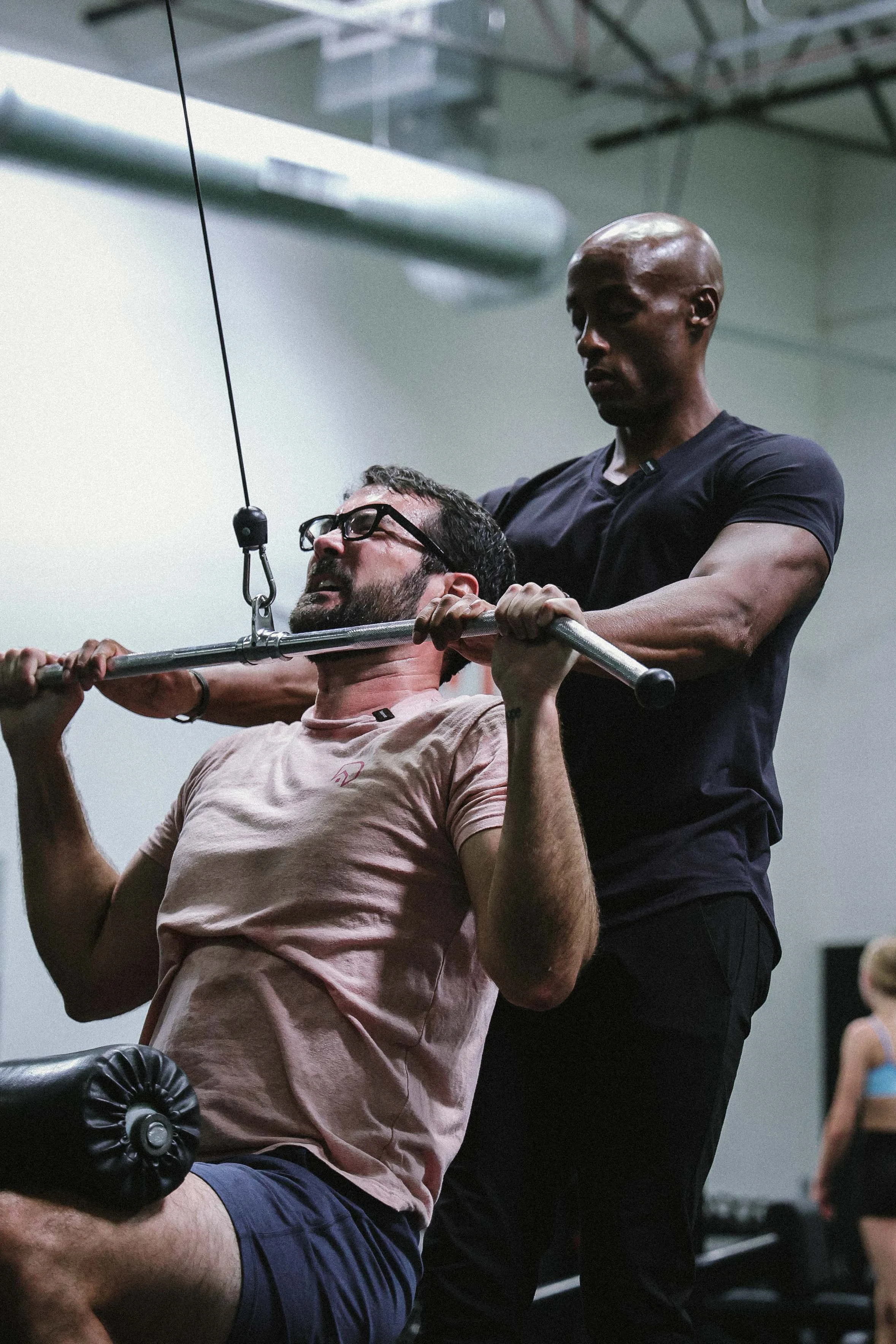
"I had never really worked out at all. I knew that if I didn't start taking care of myself I would be leaving some of my capabilities on the table. I wanted to bring 100% of myself into the field so I can provide for my clients."
David is a real estate investor. His days move between site visits, client calls and deals that don't wait. When he came to me, he had no real training history. In 16 weeks of private coaching, his DEXA scans showed:
+10.8 lb muscle
−7.4 lb fat
16 weeks, verified by DEXA
Why he started
David didn't come to me to look different. He came because he saw his health as part of his job. If he wasn't at his best, his clients weren't getting his best. A lot of the executives I coach start for the same reason.
Starting from zero
People with no training background often worry they're too far behind. It's the opposite. Beginners usually respond fastest, and it's very possible to lose fat and build muscle at the same time. The key is starting with movements you can do well, then adding weight steadily.
What the coaching looked like
Strength training built around a squat, hinge, push and pull, progressed week by week.
Practical nutrition habits that fit a schedule full of site visits and client meetings, with protein at every meal.
Check-ins to keep the plan matched to his workload.
DEXA scans to measure what was really changing.
When a week got busy, we adjusted the week instead of writing it off. One disrupted session was never treated as failure.
What the scale missed
On a bathroom scale, David gained about 3 pounds. On his DEXA scan, he built nearly 11 pounds of muscle and lost over 7 pounds of fat. If he'd been judging by the scale, he'd have thought nothing was happening. That's why I measure every client the same way.
The nutrition side
We didn't put David on a diet. He was eating on the go between properties, so a strict meal plan would have lasted about a week. Instead, we focused on a few habits he could keep anywhere:
Protein at every meal, starting with breakfast.
A go-to order at the places he ate most, so he didn't have to think about it.
Water in the truck, so he wasn't relying on coffee and soda all day.
A protein shake on days when a proper lunch didn't happen.
Those habits gave his training something to build with. The muscle he gained came from the gym, but it was the food that let it happen.
What you can take from it
You don't need a training background to get results.
Your health is part of how you perform at work.
Build the plan around your real schedule, not an ideal one.
Measure body composition, not just weight.
David's results are his own, and yours will depend on your starting point and consistency. But if you've been putting it off because you don't know where to start, he's proof that the starting point doesn't matter as much as starting.
The first four weeks
For someone who had never trained, the first month wasn't about heavy weights. It was about learning the movements and building the habit. We started with goblet squats, kettlebell deadlifts, push-ups and rows, and focused on doing each one well.
David was sore for the first two weeks, like everyone. By week three, his body had adapted and the weights started going up. By week four, the sessions were something he looked forward to instead of something on his to-do list.
Fitting training into a real estate schedule
David's days were unpredictable. Site visits ran long, deals moved fast, and clients called at all hours. We built his sessions for early mornings, before the day could get away from him. When an early morning wasn't possible, he had a shorter version he could finish in 30 minutes.
Sessions booked like client meetings, at the same times each week.
A 30-minute backup session for the busy days.
Protein at breakfast, so the day started right even if lunch got skipped.
A few go-to meals he could find near his properties.
Why beginners respond so well
Beginners have the most room to grow. When someone starts strength training for the first time, their muscles respond quickly to the new demand. That's part of why David could gain muscle and lose fat at the same time. But it only works if the training is progressive, the protein is there and the consistency holds. Beginners who skip weeks lose that advantage fast.
How his life changed outside the gym
The numbers are the proof. But David will tell you the bigger change was how he felt day to day. More energy on site visits. Better focus in meetings. More confidence in how he showed up for his clients. That was the reason he started, and it's what kept him going.
Frequently asked questions
Is it too late to start if I've never trained? No. Starting from zero is often an advantage, because your body responds quickly to new training.
How many days a week did David train? Three strength sessions a week, plus daily walking.
How was his progress measured? With DEXA scans at DexaFit, at the start and at the end of his 16 weeks.
Work with me
I coach a small number of executives one-on-one in Scottsdale, with DEXA scans to measure every change. If you want a plan built around your schedule, book a $99 Executive Performance Audit. You'll get a full strength, conditioning and mobility assessment and a personalized 7-day plan.
Related reading
References
About the author
Akram Hameed is an executive fitness coach in Scottsdale, Arizona, and the founder of Body by Akram. He is a Certified Personal Trainer, Certified Nutritionist and Strength and Conditioning Coach with a background in competitive kettlebell sport. Every client result he publishes is verified by DEXA scan. Follow him on Instagram.
This article is general education, not medical advice. Check with your doctor before starting a new training, nutrition or supplement plan.
